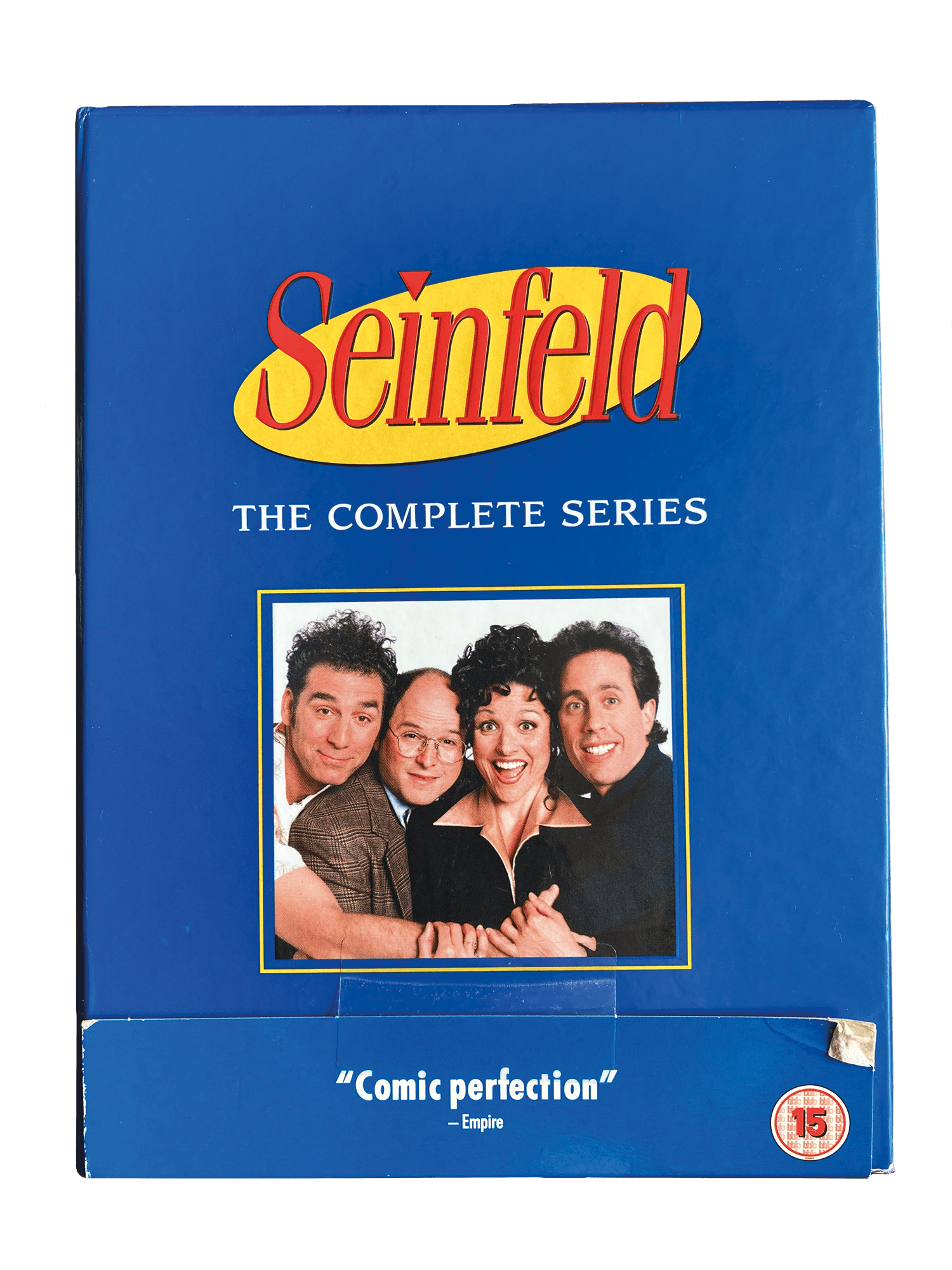
Though the first episode was aired in the US in 1989, there would be a four-year delay until it was broadcast in the UK. As a teenager, and with the show lurking in the shadows of BBC's late-night schedules, it passed me by.
It wasn't until the 2010s when Seinfeld reappeared on UK TV in a prime-time slot. Fully aware of the show's standing in the canon of popular culture, this was my opportunity to tune in.
During the 2010s Seinfeld was also shown on cable networks, like Comedy Central, and then from 2015 became available on-demand in the USA on Hulu.
In 2019, Netflix spent over $500 million for the global streaming rights to broadcast Seinfeld from 2021 through to 2026. This propelled the show to a whole new generation of audiences.
Seinfeld is considered a unique sitcom in how it deviated from the traditional rules of the time, rejecting the classic three-act story in favour of a faster-paced multi-story structure. It was essentially written in a different key, focusing on - and amplifying - the minutiae of daily life, and earning its reputation as the show about nothing.
Seinfeld sidestepped sentimentality as well as the pursuit of resolution. With its mantra of no hugging*, no learning the lead characters were insecure and entertainingly flawed, lacking any desire or capability for personal growth when faced with the slightest adversity or annoyance, and especially in their romantic encounters.
*the first clip notwithstanding!
Despite their flaws, I loved the irreverent characters, with their absurd obsessions and neurotic tendencies, and the hilariously avoidable situations they found themselves in.
As I read more about the show, my fascination with the creative process behind it grew. It was the musicality of the show I found particularly intriguing, orchestrated by the comedic talents of co-creators Jerry Seinfeld and Larry David.
Like music, situation comedy has rhythm and it has texture: rhythm is shaped by a show's timing, its scene-structures, and its pacing; textures are created by the 'instruments' of characters and their locations, which amalgamate to create the situations from which the comedy manifests.
I became intrigued by the possibilities of mixing work with pleasure: visually exploring a sitcom through its data.
Intrigued became compelled. I wanted to explore how Seinfeld and David, with the support of their evolving pool of talented writers, managed to achieve such sustained sitcom brilliance. Much like a sports coach seeks to assemble the right players in the right combinations, to win a game, I wanted to explore how the Seinfeld ‘coaching team’ used their resources to assemble the right characters in the right scenes, in order to score the laughs and create TV gold.
And so began a self-motivated, long-running, entirely unnecessary, data-driven exploration of every episode of Seinfeld.
The first product of this work was my 2020 publishing of The Seinfeld Chronicles, a limited-edition printed book presenting all my extensive analysis. With 176 copies released, matching the number of written episodes, this reached a small but exclusive, passionate, and generous audience.
My curiosity transcended just reading more about the show, it was now time to go deep. I decided to immerse myself in an entirely unnecessary, self-motivated, long-running, data-driven exploration of every episode of Seinfeld. Why not!
The first product of this work was my 2020 publishing of The Seinfeld Chronicles, a limited-edition printed book presenting all my extensive analysis. With 176 copies released, matching the number of written episodes, this reached a small but exclusive, passionate, and generous audience.
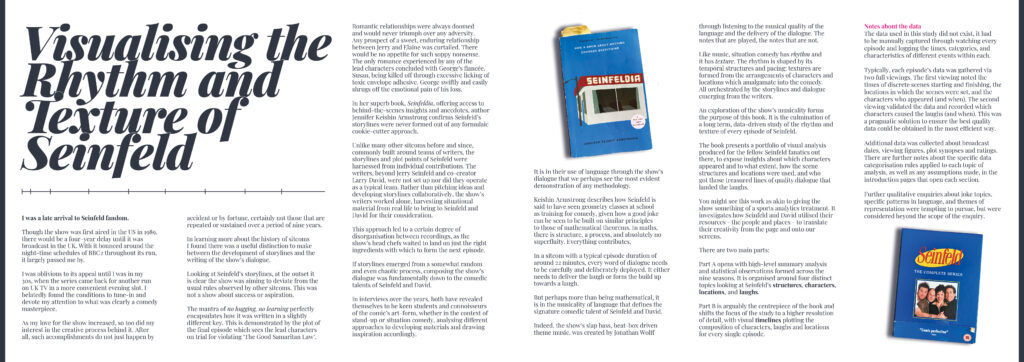
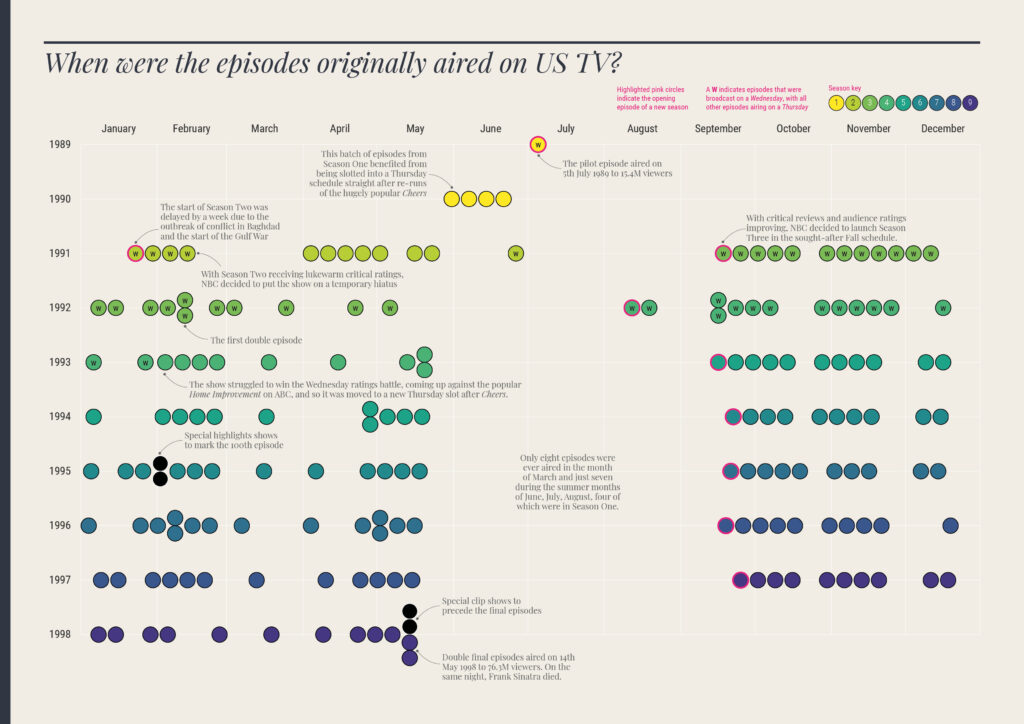
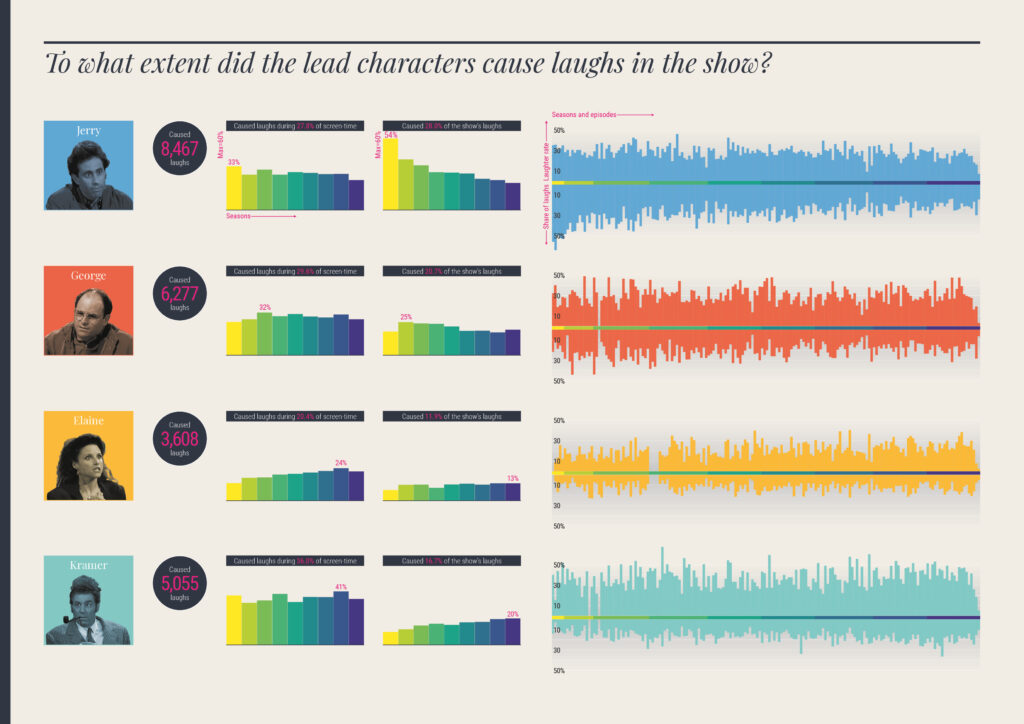
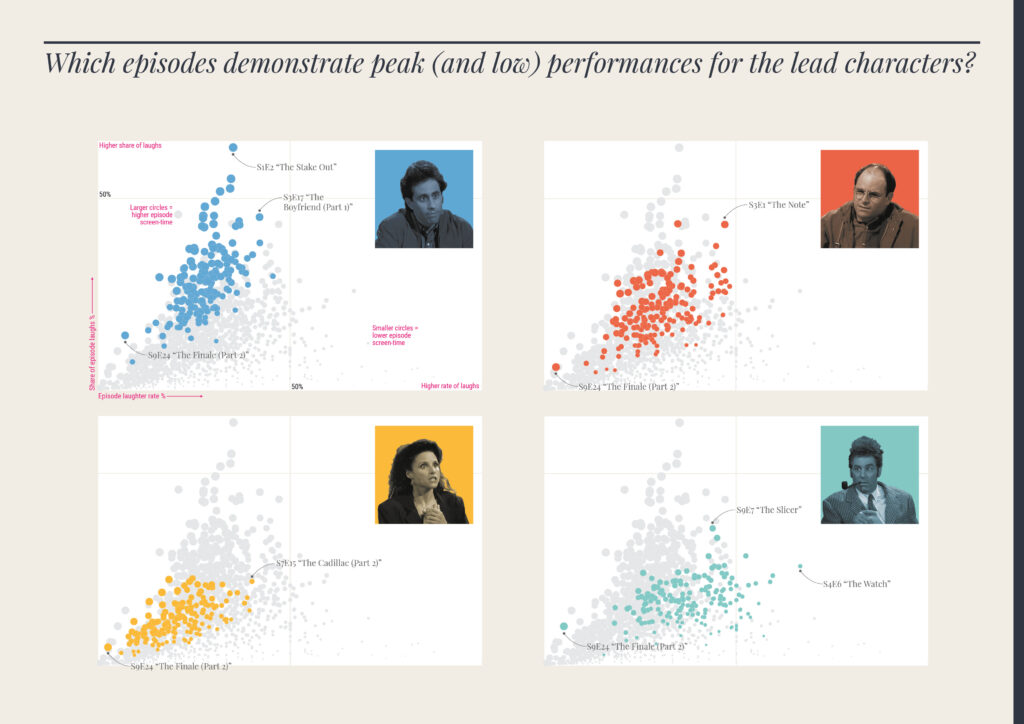
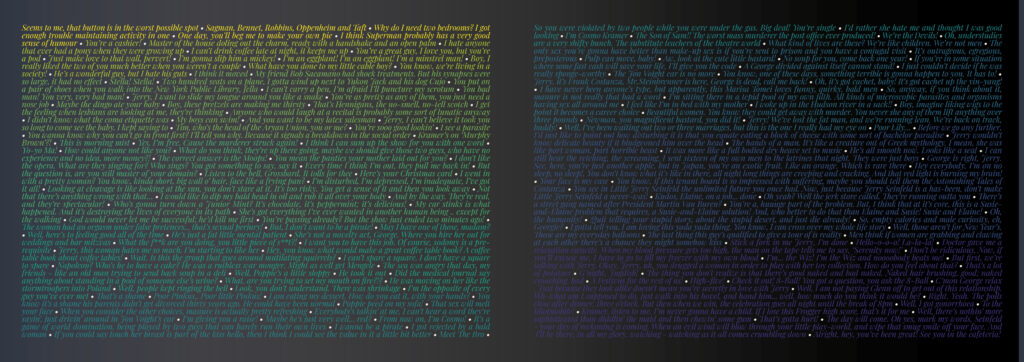
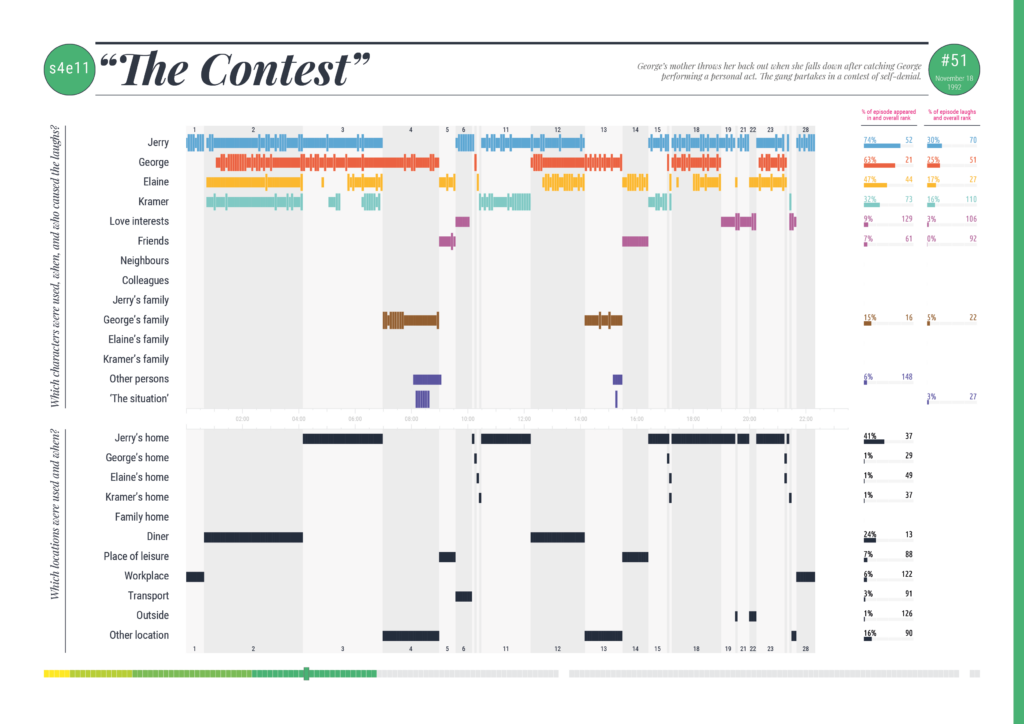
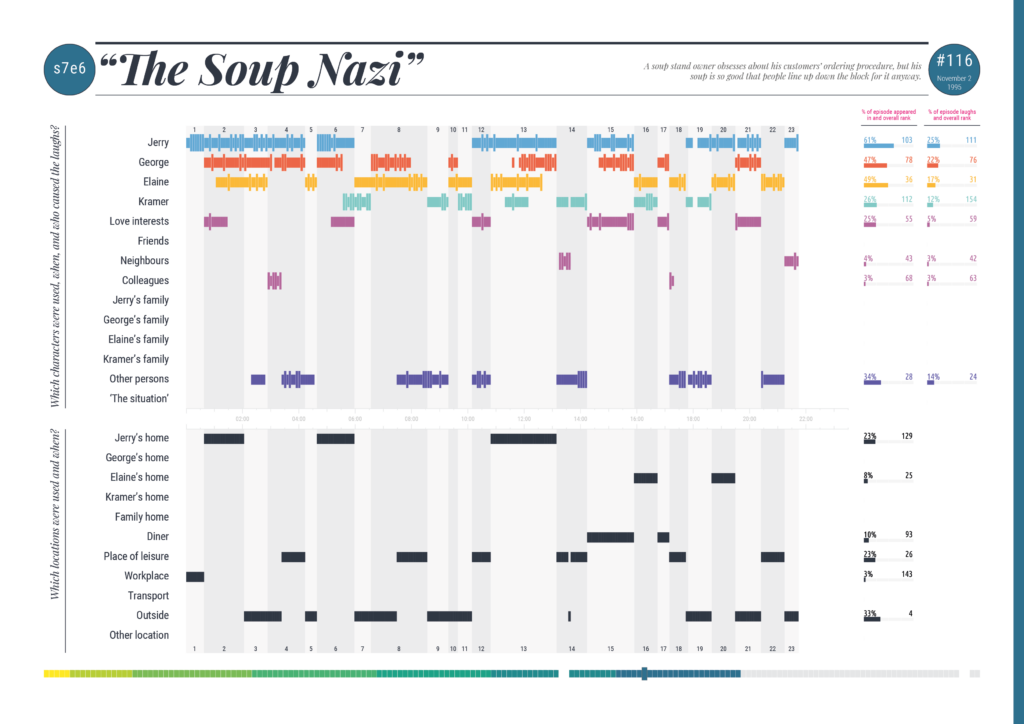
A few years later, I decided it was time to revisit this work and develop a new format that could reach a wider audience.
Presenting, The Seinfeld Chronicles digital edition.
The Seinfeld
Chronicles

...unleashed in digital form by Anne-Marie Dufour
 and Miriam Quick
  / Duncan Geere
  { Loud Numbers
  }
}Chronicle
nounA factual account of important of historical events in the order of their occurence.
verbTo record a series of events in a factual and detailed way.
The Seinfeld Chronicles
Also known as 'Good News, Bas News', or, simply, 'Pilot', 'The Seinfeld Chronicles' was the title given to the pilot episode of the popular American sitcom, Seinfeld.